Johor Wedding Customs: The Tol, Buka Kipas and Rewang
Ask anyone what is different about a Johor wedding and they will say the tol. Before the groom can sit beside his bride, the bride's side blocks his path and charges him to pass, once at the gate, again at the door, and a last time to lower the fan in front of her face. It is played for laughs. It also takes planning. Here is how the tol works, the rest of the Johor sequence, and the numbers you need for the paperwork.
JKKN records the custom under two names, adat bayar tol and adat tebus pelamin. Both describe the same thing: the bride's family stops the groom from reaching the pelamin until he pays. In a Johor bersanding the bride is usually already seated on the dais when the groom's procession arrives, so he has to work his way to her.
The JKKN entry describes three stops. Families add more if they have a lot of cousins, and a viral video Sinar Harian covered had the tol booths named Kulai, Machap and Pagoh, after real toll plazas on the North-South Highway.
1
The gate or compound
Children, teenagers and a few elders block the way into the house compound. Small notes or sweets get the groom through.
2
The door, before the pelamin
The bride's female friends and relatives guard the last stretch. Expect pantun, riddles and a lot of haggling.
3
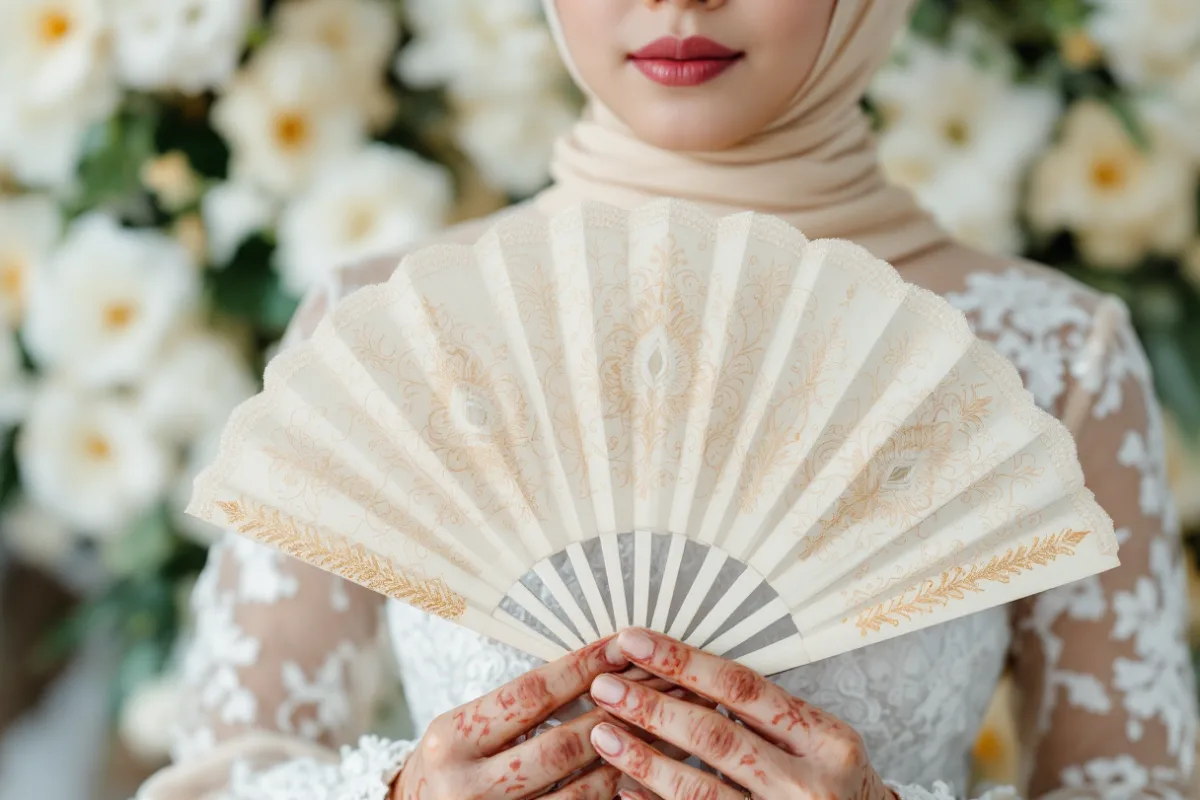
Buka kipas
The mak andam holds a fan over the bride's face and lowers it only when the groom pays. This is the last stop and usually the most expensive.
How much to bring for the tol
The traditional amount was tiny. JKKN puts it at 50 sen to RM1 a stop, or more depending on what the groom's family can afford. Nobody was meant to profit from it. The point was the back and forth.
Inflation has reached the tol too. Recent write-ups mention buka kipas fees of RM200 or more, and that has made the custom a sore point in some families. If you are the groom's side, ask the bride's family privately what they expect and prepare envelopes in advance. If you are the bride's side, agree a ceiling with your mak andam before the day. A groom stuck at the door for twenty minutes while relatives argue about money is not the photo anyone wanted.
Prepare small envelopes or a pouch of RM1 and RM5 notes for the first two stops.
Keep one separate envelope for buka kipas, agreed in advance.
Bring someone quick with pantun. JKKN specifically notes the groom needs an escort who can handle the bargaining.
Rewang: cooking together the day before
Rewang, or merewang, is the communal cooking session the day before the kenduri. Relatives and neighbours turn up to peel onions, stir the gulai and set up the khemah. Most kampung weddings across Malaysia have some version of this, but Johor people are fond of the word and the habit, and you will hear about it if your majlis is at a family home.
A catered wedding in a hall skips most of this. Plenty of Johor families still hold a smaller rewang anyway, for the kuih, the doa selamat lunch or simply because the aunties expect to be asked. Budget for the food and drinks you serve the helpers. It adds up.
Mas kahwin in Johor: RM22.50
Johor sets one of the lowest mas kahwin rates in the country, RM22.50, for both first marriages and remarriages. Compare that with Selangor's RM300 for a first marriage or Kelantan, where there is no fixed rate at all. The figure is a minimum. Families can agree to more, and many do, but the low base is why Johor weddings rarely argue about mas kahwin and spend the energy on hantaran and belanja instead.
Confirm the current rate with the Majlis Agama Islam Negeri Johor or your kadi when you submit the nikah forms. Rates do get revised.
Entertainment: zapin and the rest
Johor is the home of zapin, and a zapin troupe at a Johor wedding is a nice nod to the state. Some families in areas with Javanese roots still book kuda kepang, though it is far less common than it was. Many Johor families have Javanese or Bugis grandparents, and those families sometimes fold their own customs into the day. Ask the elders on both sides before you assume the sequence.
Planning a Johor wedding in 2027
Johor went back to a Saturday and Sunday weekend in 2025, which makes Sunday kenduri easy again. Schools are in Kumpulan B: the 2027 mid-year break is 22 May to 6 June and the year-end break starts on 4 December. Hari Raya Haji is expected on 17 May 2027, right before the mid-year holiday, so the following two weekends will be crowded.
If a lot of your relatives work across the Causeway, check Singapore's public holidays as well. A Monday holiday there can decide whether a whole branch of the family makes it home for the weekend.
Frequently asked questions
What is the tol in a Johor wedding?
A playful custom where the bride's family blocks the groom on his way to the pelamin and asks for money to let him pass, usually at the gate, at the door and when the mak andam lowers the fan in front of the bride's face.
How much money should the groom bring for the tol?
Traditionally 50 sen to RM1 for each stop. Buka kipas can cost more now, sometimes RM200 or above, so agree the amount with the bride's family beforehand.
What is buka kipas?
The last tol, where the mak andam holds a fan over the bride's face and only lowers it once the groom pays.
How much is mas kahwin in Johor?
RM22.50 for both first marriages and remarriages. It is a minimum and families can agree to more. Check the current rate with the state religious council.
Is the tol compulsory?
No. It is entertainment. Some families skip it or keep it to one stop, especially at a hotel reception where time is tight.